

Maritime China
Far from turning its back on the sea, the fate of Qing China was tied as much to tides and storms as to cavalry and walls

To live with the sea as an empire means not to conquer it. It doesn’t necessarily mean sending fleets to dominate far-off waters. It means waking up every morning understanding that storms, smugglers, merchants and fishers alike operate beyond the reach of authority. The ocean is untameable. It unites and separates nations simultaneously. Empires have known this for centuries, from Britain to Spain. Their power on the sea has always been precarious. Late Imperial China understood that as well.
Few historical figures are as admired in China today as the Ming dynasty admiral Zheng He (1371-1433). For generations, he has been celebrated at home as the leader of seven epic voyages between 1405 and 1433 through the Indian Ocean. Overseas, Zheng He has often been portrayed as a rival of sorts to his contemporaries Christopher Columbus or Vasco da Gama. Whether or not he qualifies as an ‘explorer’ like his European counterparts or exactly how far his ships sailed are questions still hotly debated today. What is certain is that, for better or worse, Zheng He has for centuries been seen as a link between China and the maritime world.
But what else do we find besides Zheng He? To many observers, the next few centuries appear as if China turned its back on the ocean. The traditional narrative portrays the Qing dynasty that ruled from Beijing from 1644 to 1912 as a land power obsessed with the grasslands and continental growth. Within this framework, China’s absence of naval power explains how the dynasty came to be beaten, soundly and humiliatingly to many contemporaries at the time, by Western imperial powers starting in the 19th century. The Great Wall is the symbol of this era, not the blue frontier. The sea is relegated to little more than a Ming dalliance with overseas exploits; temporary, aberrational, and then deserted.
But empires do not simply turn away from seas that lap at thousands of miles of coastline. The question is not whether the Qing cared about the ocean. It’s how they lived with it.
It is true that the 18th century saw no Chinese fleets on the scale of Zheng He’s sailing across the Indian Ocean. Yet this did not mean the Qing empire had turned its back on the sea. Along its coasts, officials had a tough time with pirates and smugglers who made it hard to tell the difference between business and crime. People who lived along the coast prayed to sea gods for safe passage, built temples on high ground, and held ceremonies to remember shipwrecks. In the banquet halls of Canton, Suzhou and Beijing, shark fin and sea cucumber became fancy foods that gave people status, bringing the ocean into the heart of high society.
To focus only on the absence of such outward engagements, if I can put it this way, is to miss the more complex reality. Across the early modern centuries, the Qing empire remained closely tied to the sea. It was not a place to conquer, but a place to establish authority, a place to find faith, and a place to satisfy certain desires. To recover this history is to move beyond Zheng He’s iconic image and see a China whose fate was tied as much to tides and storms as to cavalry and walls.
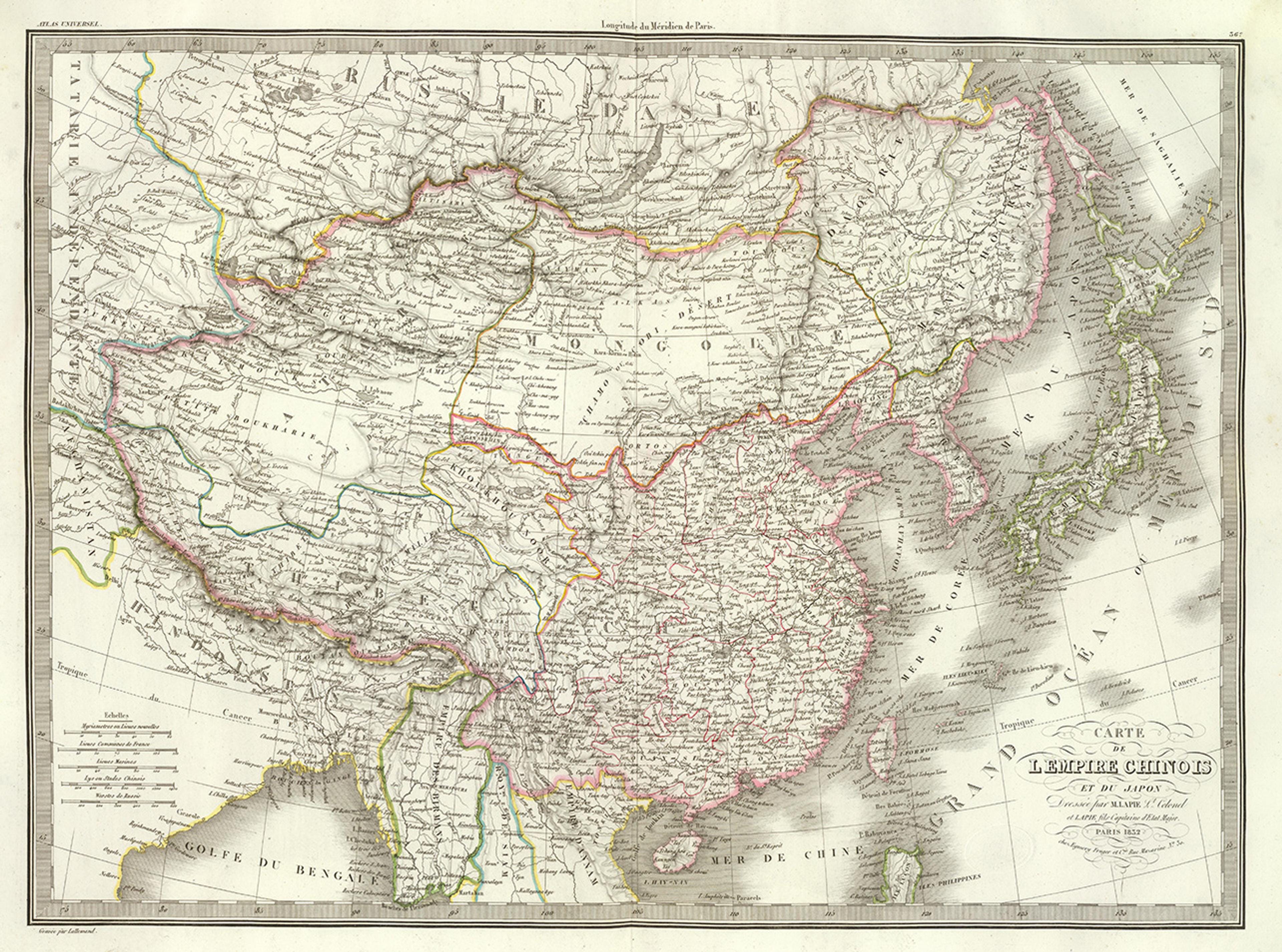
Join more than 270,000 newsletter subscribers
The Qing empire took over from the Ming both the throne in Beijing and the problem of the coast. Seeking to cripple the Zheng family’s power base on Taiwan and starve out the last pockets of Ming loyalism, early Manchu rulers reinstated draconian maritime prohibitions (haijin). Entire coastal villages were uprooted and moved inland; their homes burned, their boats destroyed. The bans were designed to prevent contact between Qing subjects on China’s coast and foreign traders beyond. Lives were upended, but goods kept moving. Rival smuggling networks arose to meet the demand of foreign merchants eager to trade. In effect, the haijin mainly served to penalise villagers.
But they failed.
Smuggling networks adapted; foreign merchants still found eager partners.
By 1683, when the Qing conquered the Zheng regime and took Taiwan, prohibition had already proved impracticable. The empire could not seal off the sea but had to learn to control it. Offices were opened to oversee customs, shipping rules formalised, and maritime trade slowly brought back under control. Something that had previously been seen as endangering the dynasty was transformed into a vital source of revenue.
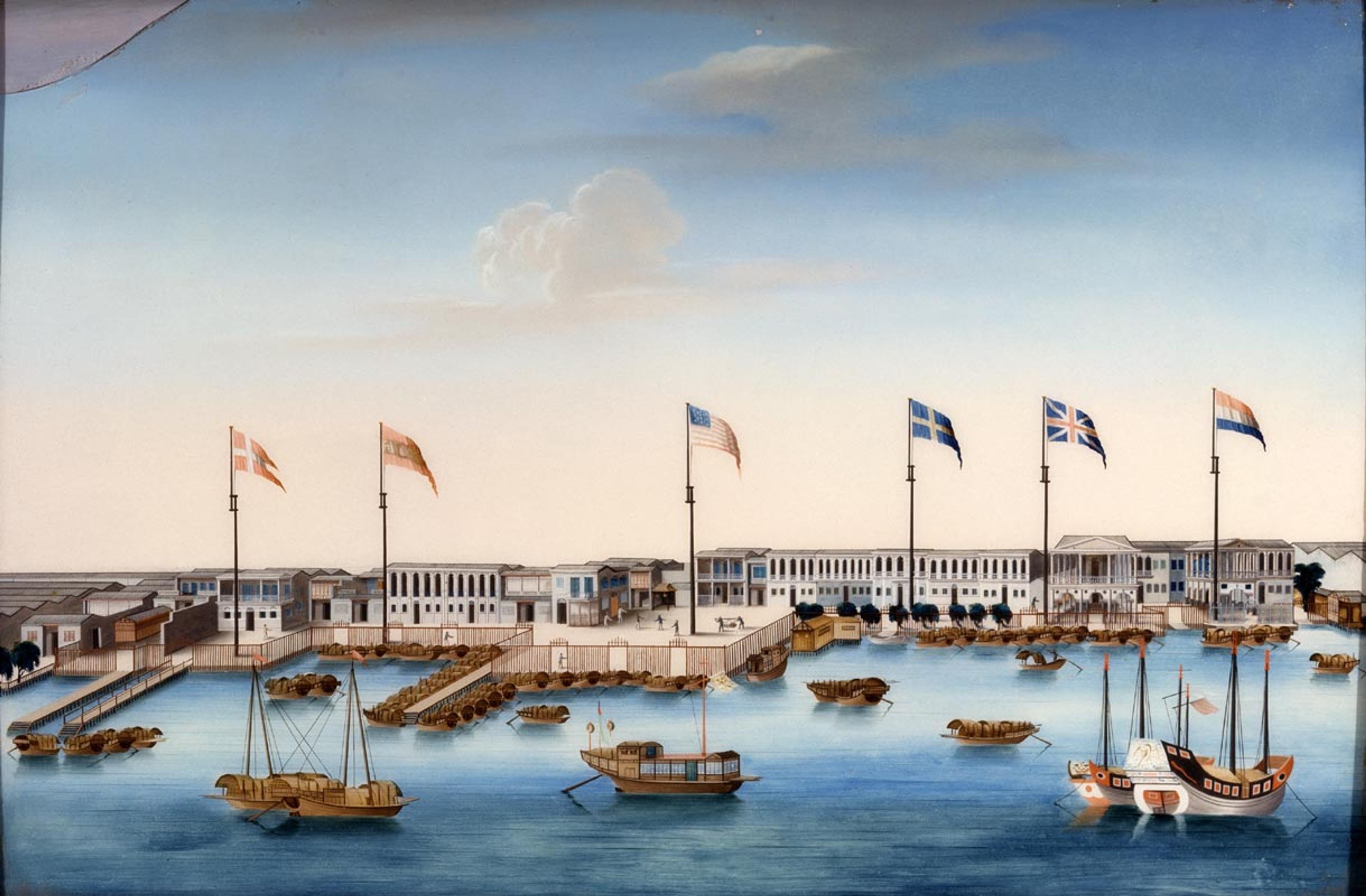
The most significant aspect of this new system was the Canton System, which was formalised beginning in 1757. Long caricatured as a ‘one-port policy’ that confined foreign merchants, in the West it is usually described as myopic and hopelessly behind the times of international trade. However, the system worked because both sides recognised the rationale behind it. Foreign merchants themselves liked Canton: they were protected there not only by batteries and patrols but also by stockpiles of human capital necessary for trade. Cohong guild merchants offered credit; interpreters were readily available; and brokers knew the intricacies of necessary rituals of negotiation. The system was a compromise, but it was compromise enforced with both hardware and software. For decades, it worked exceedingly well. Silver flooded in from Mexico and Japan; tea, silk and porcelain flowed out.
Pirates roamed the seas, smugglers plied their trade in the shadows
Business at Canton was elaborate. Ships from Europe rode at anchor at Whampoa with limp flags in the heat and humidity. Customs officials boarded each arriving vessel to tally its cargo and collect duty. Merchants bargained in crowded warehouses while tea was compressed into bricks, silk rolled into bales, and porcelain bundled with straw. Activity in Canton’s confined and regulated Thirteen Factories district connected China to a world economy from London to Manila.
Nevertheless, discomfort lingered. The separation of foreigners was permeated with hospitality and distrust. Qing wanted gain but dreaded chaos. Canton was the physical manifestation of that contradiction. Foreigners called it oppressive, but it lasted because it satisfied empire and commerce. It didn’t collapse in the 19th century because of what it was, but because of how much steam imperialism – industrial and gunboat – could bring to bear.
Beyond Canton, the sea was harder to manage. Pirates roamed the seas, smugglers plied their trade in the shadows. Some small-time fishermen smuggled salt or silk to earn extra income; larger smuggling networks built fleets that dwarfed those of provincial governments. One of the most feared pirates in the late 18th century was Cai Qian (1761-1809). Able to deploy large fleets of fast-moving junks, he regularly raided towns throughout Fujian and Guangdong. Cai’s ships could slip away into secluded bays faster than any government navy. Locals offered him protection money, traders gave him bribes, and some officials cooperated with him secretly.
Cai was not merely a criminal but a symptom of deeper structural contradictions. He flourished because imperial authority at sea was partial and negotiable. A man condemned as a pirate in one yamen (government office) might be tolerated as a trader in another. Goods such as silk or salt were not inherently illegal; they became illicit only when moved through unofficial channels. For local officials, collaboration could be more profitable than suppression. Cai’s career reveals the porousness of Qing categories: trade and crime, subject and outlaw, authority and complicity.
At the height of her power, Zheng Yi Sao commanded hundreds of ships and tens of thousands of men
Cai’s legacy lives on in how piracy has been remembered in China. In official historical texts, he was cast as a plague, a pirate and rebel who needed to be defeated. But stories along the coast remembered people like Cai in more complicated ways: as both predators and providers to be feared and relied on at the same time. That legacy matters today. Countries continue to debate how to respond to maritime security threats in the South China Sea from actors who don’t want for ambiguity: fisher folk who moonlight as militia, smugglers who see themselves as traders. The Qing dynasty couldn’t neatly categorise Cai Qian’s followers, for instance, and the line between licit and illicit activity at sea has never been clear-cut.
Greater still was Zheng Yi Sao (1775-1844), who took control of her husband’s fleet in 1807 and transformed it into an efficient syndicate. At the height of her power, she commanded hundreds of ships and tens of thousands of men. Rules were strictly enforced: disobedient pirates were executed, plunder was fairly distributed among the group, and civilians could not be killed wantonly. She out-generalled provincial fleets for years and forced the Qing into negotiations. That a woman was able to rise to command such a vast network speaks to the opportunities available on the sea, as well as the weaknesses to which the sea exposed the Qing.
The careers of Zheng Yi Sao and Cai Qian demonstrate the broader bounds of imperial governance as well as the strains on Qing authority at sea. The empire faced simultaneous pressures from local unrest, frontier defence, population growth, and financial strain. The sea, however, was never disregarded. It was never merely a question of linearly expanding already-existing institutions. Dealing with individuals who did not fit neatly into the categories of subject, outlaw, trader or rebel was part of it. Piracy flourished because, like rule on land, rule at sea was inherently erratic and conditional, not because the Qing lacked a maritime branch of government. To view it this way is to cease categorising the Qing as either strong or weak. Although it was active and had authority, it operated by adjusting, engaging, and exposing itself to forces that it would never fully control.
For every patrol Qing officials sent out, for every proclamation they posted, coastal residents took other measures for protection. Some sought refuge in gods, others in ritual. Many learned simply from experience. For these people, the sea was never impartial. It gave life but just as quickly could take it away. It was placid in the mornings but whipped fierce in the afternoons, cutting ships’ masts in two and sending men flying into the air. Where human authority broke down, divine rule could impose a new order.
Foremost among the sea deities was Mazu, locally Tianfei, the Heavenly Consort. Mazu was believed to be born Lin Moniang in Fujian during the 10th century. She was known to be a soft-spoken girl who possessed the ability to rescue sailors. Stories were told of Mazu quelling storms with her gaze or leading lost ships through rocky straits wrapped in red. Following her death, she is said to have hovered over the sea rescuing anyone who invoked her. By the 18th century, her cult spread throughout coastal regions from her hometown, with shrines built as far north as Zhejiang and as far south as Guangdong, Taiwan and beyond, following the diasporic traces of Chinese communities.
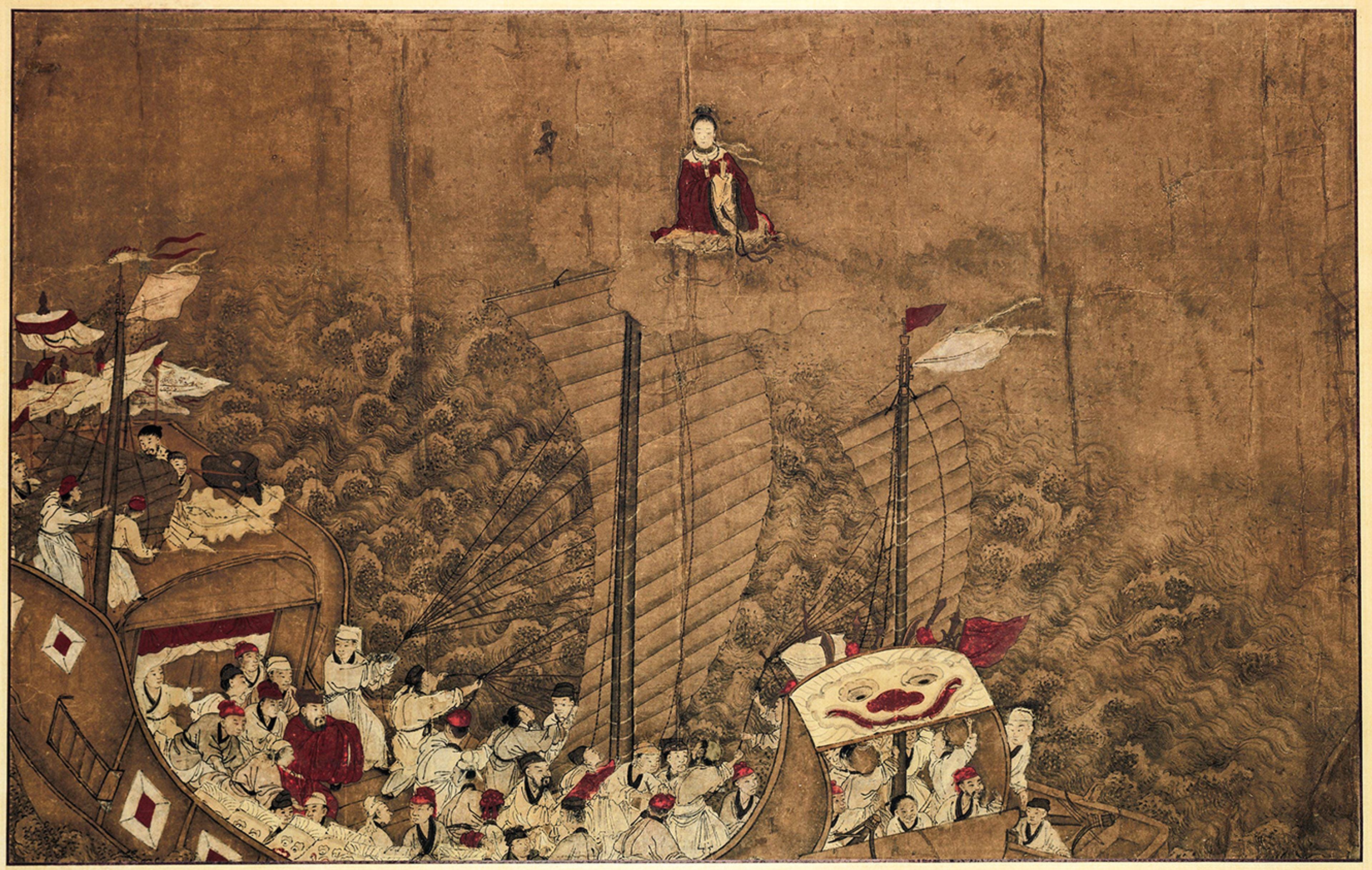
The red walls of her shrines might be the first thing a traveller sees as they get closer to Fujian’s ports. The air was thick with incense, and statues draped in silk looked down from their altars with calm eyes. Before casting their nets, fishermen left bowls of rice or paper boats. Merchants who safely returned from Manila or Batavia paid for repairs or left plaques of appreciation. The sound of crashing waves mixed with the sound of temple ceremonies. Here, religion and livelihood intertwined: to sail without Mazu’s blessing was to invite disaster.
Mazu was not alone. There were Dragon Kings who ruled winds and rain; shrines dedicated to drowned sailors, and ancestors who died along coastal regions. In Zhejiang, fishermen prayed to Guanyin, the bodhisattva of compassion, who was believed to appear as a fisherwoman during times of distress. These gods mirrored the vastness of the coast. No one deity ruled it outright, and traditions differed from port to port.
Living by the sea meant living in a world where the natural and the supernatural mixed
The state went back and forth between being suspicious and supportive. Imperial edicts warned against heterodoxy, but local magistrates often supported temple rituals because they thought they were ways to keep things in order. By paying for a shrine, an official showed both piety and kindness, which brought communities closer to the dynasty. Some people even said that God helped them stay alive at sea. For a short time, ritual could bring together the empire and its subjects.
Shipwrecks laid bare the dangers of the sea. Gazetteers from Guangdong and Fujian recounted fleets scattered by storms, cargo lost to the waves, and bodies cast ashore. Survivors and villagers responded with ceremonies for the dead: they buried them, offered food and incense, and raised memorial steles. In some places, entire temples were built to mark wrecks that claimed many lives. Such acts transformed disaster into a collective duty, acknowledging the drowned as moral figures whose memory demanded honour.
In this way, religion was just as important to the sea as forts or patrols. Temples held communities together, rituals helped people deal with loss, and festivals brought everyone together. Living by the sea meant living in a world where the natural and the supernatural mixed, where waves brought both danger and new information.
This spiritual aspect makes it harder to think of Qing China as a landlocked country or one that didn’t care about the ocean. Coastal communities negotiated their relationship with the sea through worship long before imperial officials established any formal policy on the matter. Rituals devoted to the sea gods constituted a kind of shadow sovereignty that regulated anxieties through faith. By the late 17th century, officials were capitalising on this devotion, officially sanctioning Mazu into the imperial pantheon as the ‘Heavenly Empress’. But her dynamism existed among the people, in local celebrations, sailors’ prayers and the sacrifices of widows.
Viewed in this way, maritime religion was never trivial or tangential. It was yet another sphere – alongside trade and defence – in which the empire and its subjects were obliged to negotiate with the sea. Just as Canton’s customs houses tried to channel trade and pirates provoked officialdom, so too did temples and festivals ritualise danger at sea. These institutions remind us that the Qing did not simply react to the sea as a military or economic challenge. For countless coastal residents, the ocean was a force to be tamed by law, propitiated by prayer, and devoured by appetite.
Power and faith were not the only forces shaping the Qing’s encounter with the sea. Appetite was one as well. Fishermen endangered their lives pulling animals from the ocean. Meanwhile wealthy patrons in coastal and interior cities transformed those very animals into symbols of status and sophistication. Appetite, just as much as a fortress or a temple, tied the empire to the ocean.
Shark fin was one of the most well-known of these indulgences. Sharks were viewed by fishermen as predators: hazardous, erratic, and frequently fatal for those who fell overboard. However, the fins were turned into delicacies in upscale kitchens. They were expertly dried and prepared, softening into gelatinous strands that were valued for their texture, which absorbed the essences of other ingredients, rather than their potent flavours.
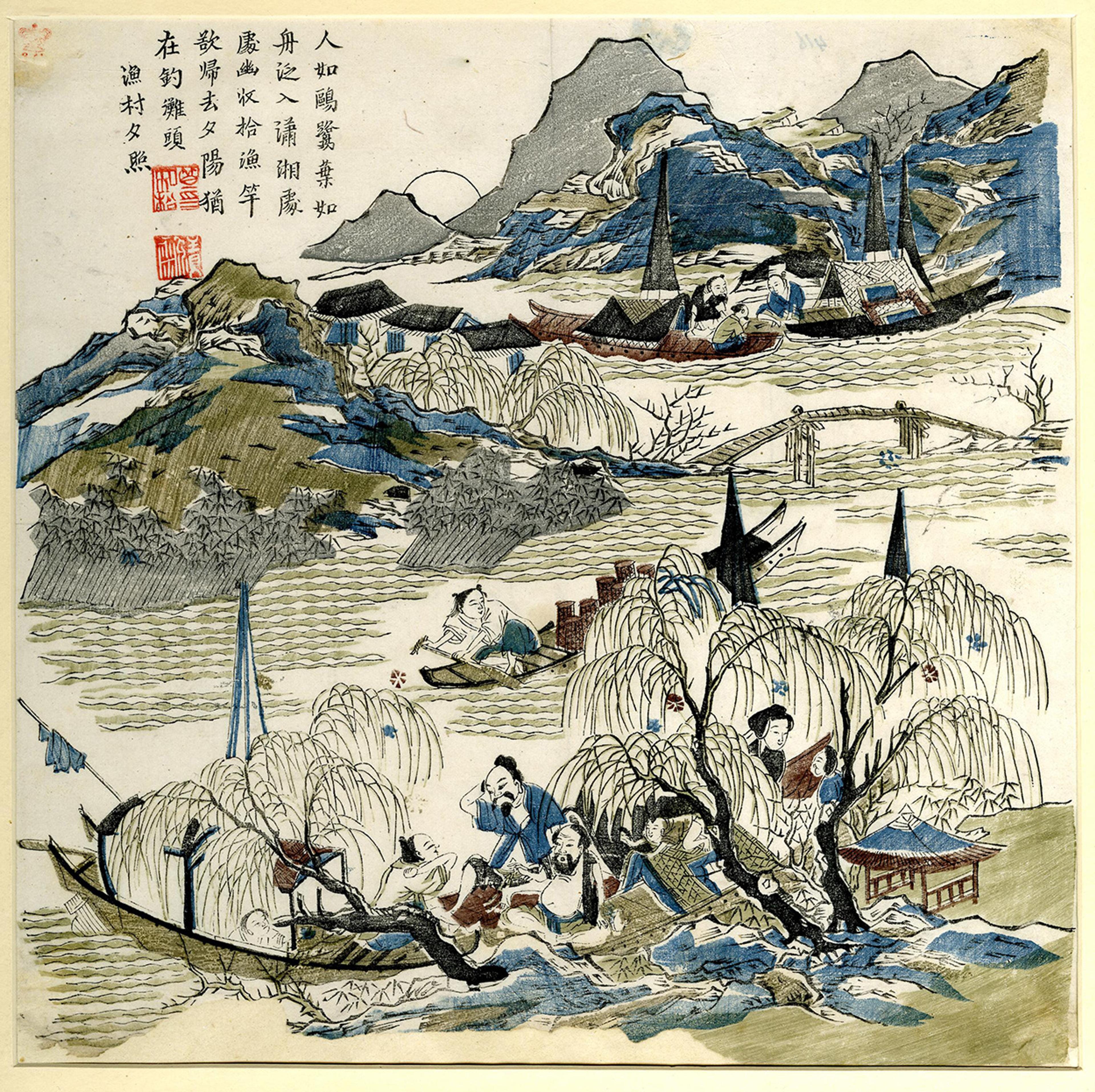
At a banquet in Canton, Beijing or Suzhou, guests might receive shark fin soup in a tureen as their first course. Steam rose from bowls of broth that glistened in lamplight. Cloaked in silks, courtiers and mandarins cautiously sipped from porcelain bowls. Dining was theatre as much as cuisine. Serving shark fin signified dominion over nature by subduing a fierce ocean predator; dominion over commerce by commanding the supply chain of fishermen, traders and cooks who transported it inland; and dominion over culture by proving your ability to appreciate food whose expense trumped its taste.
Hierarchy therefore became dependent on appetite. Shark fin became a status item. Offering it allowed one to mark their place among the wealthy; refusing it implied scorn for the host. Banqueting itself became politicised; it became a stage for alliance-building and hierarchal maintenance. The sea became integrated into Qing power’s circulations as both a larder for cultural productions and a frontier that had to be defended.
Appetite became another way to validate one’s upper-crust standing
This trade also brought sea cucumbers, fish maw and abalone to market. Harvested off the coasts of Southeast Asia, dried, and transported north, sea cucumbers (known as trepang) were consumed at banquets for their chewy texture and their alleged aphrodisiac qualities. Fish maw were swim bladders of large fish that were eaten for the rich flavour they added to broth. Dried abalone caught off the coast of the South China Sea could fetch high prices inland. Each step of the way, these commodities were processed and exchanged along routes that connected low-level fishermen with rich consumers: divers risked their lives harvesting on reefs; locals dried and packed the sea cucumbers; merchants transported goods upriver or overseas; cooks transformed the oceanic into luscious feasts; hosts displayed them at highly ritualised dinners. Desire for these commodities linked the culture of elites to distant ecosystems, connecting quotidian risk at sea to social status on land.
Consuming shark fin or abalone was quite literally putting yourself in rarified air. Foods like these carried connotations on multiple levels, much like tea leaves or jade. They signified wealth, yes, but also taste – someone with the means to understand subtle differences in texture and flavour that are lost on common folk. Appetite became another way to validate one’s upper-crust standing.
Distant actors were bound together by a desire for the pleasures of the sea. The fin of a shark or the body of a sea cucumber connected a fisherman in Fujian, a merchant in Canton, a cook in Suzhou, and a visitor in Beijing. These links highlight a little-known aspect of Qing maritime history. The empire’s interactions with the sea extended beyond its navies and officials. It interacted through its elites’ appetites, which attracted marine life to power and status circles.
Additionally, banqueting served as a link between the empire and the outside world. As they arrived in Canton, foreign traders took note of the food being served to them, occasionally finding the flavours and textures difficult to handle. In European travelogues, shark fin in particular came to represent exotic China. In this way, appetite was both domestic and international, influencing how China was viewed as a sophisticated and opulent civilisation overseas.
Ultimately, desire domesticated the sea within the empire. From dangerous human labour underwater arose associations of culinary delicacy at imperial tables. Coastal ecologies became performances of power at urban banquets far from the ocean. Elite consumption patterns reinforced status within China, as well as imperial prestige overseas where foreigners saw shark fin and other extravagances as representative of a refined civilisation. As much through flavour as force or finance, the sea entered daily life in Qing.
At first glance, it seems there is a wide gap between the epic voyages of Zheng He in the 15th century and the more demure, porcelain-thin world of Qing junks. For decades, that silence has bolstered beliefs that China turned its back on the sea, until Western warships propelled it back into harbour. The 18th century, however, speaks volumes – if we listen.
The Qing no longer sent great treasure fleets across the Indian Ocean. That era was over. But the dynasty didn’t simply abandon the coast either. Officials kept up patrols and collected duties. Pirates harassed villages, struck bargains, even bribed the men sent to stop them. Fishermen and their families prayed to Mazu before a voyage and, after storms, the drowned were buried with small rites. At the other end of the social scale, elites dined on shark fin and abalone, turning dangerous catches into dishes that marked rank and taste. The sea, in short, was inescapable, shaping politics, local economies, and coastal ecologies.
The oceans have never been entirely tamed. They disrupted the societies that depended on them
So why should we care about any of this? Why should maritime China matter to us? The sea is important because it has never been just a stage on which history was acted out. It unsettled nations and disrupted empires, reordered economies and redefined lives. Think of the 18th century. Far from providing neat narratives of ascent or decline, maritime history reveals how no-one was ever master of the seas. True, the great naval empires we are familiar with (Britain, Spain, Portugal…) were able to deploy fleets and claim trade routes. They could not control storms, fickle markets or the uneasy compromises that stitched together coastal communities. It was down at sea that borderlines were blurred between what we might prefer to keep separate: legality and crime, riches and mere survival, adventure and peril. China was a player on that stage but it was not the only one. Britain experienced it on the Atlantic, Spain across the Caribbean, the Ottomans on the Mediterranean. From every corner of the globe, coastal powers and local communities learned that the ocean was a frontier to be weathered.
It is also why the 18th century, or the Qing in the early modern period more generally, continues to matter. Efforts to use history to make tidy assertions about maritime prowess or openness abound. Zheng He’s voyages remain the favourite whipping boy of such arguments. But the Qing narrative that followed his journeys was hardly tidy. Negotiations with pirates, burial rites for drowned sailors, dinners that turned perilous catch into objects of prestige: these were empire’s moorings to sea. They also revealed how the uncertain maritime world could be ordered and understood.
Seeing it this way allows us to recognise that the oceans have never been entirely tamed. They disrupted the societies that depended on them, including China, and they continue to disrupt our writing and talking about the past. Giving up neat narratives, whether of inevitable rise or fall, or of humanity’s seamless control over nature, might be the first step in respecting the sea as a historical actor.